3D anatomy from
too few 2D views
One of three problems I take on as a contractor, on model work that has to survive a regulatory file and not only a benchmark.
Problems I solve
Three of them. Each one has published work behind it.
3D from too few 2D views
Two angiographic planes. A freehand ultrasound sweep. A stack of slices with gaps between them. The volume still has to be anatomically plausible where the acquisition never looked, and that is what a learned shape prior is for.
- Biplane is all you need (under review)
- Liver mesh GNN, IEEE ISBI 2023
- Whole-heart SSM, arXiv:2608.19932
Models that work when the labels are not there
Self-supervised pretraining, annotation-efficient segmentation, and evaluation on the cohort you actually have rather than the one you wish you had. I report the failures too: modality-invariant pretraining helped on several tasks in our hands and hurt lesion segmentation.
- SSL-DSE grant, 148 306,80 EUR
- Medical Image Analysis, with S. Kadoury
- FOMO25, 3rd in the method track
Signals, not just images
Voice and handwriting carry the diagnosis too, and they are cheaper to collect than a scan. Parkinson's disease from voice recordings is my most cited work, at 180 citations.
- CNN ensemble on voice, 180 citations
- npj Digital Medicine, speech biomarker
- IEEE TSMC, offline handwriting
Ten working days,
one number to decide on
Most first conversations do not need a contractor line and a headcount request. They need a result you can act on. So the first piece of work is a fixed scope at a fixed price, both agreed before it starts.
A negative result is a valid outcome and you get it in writing. If the method does not beat your current number, the report says so and we stop there.
Start a scoping engagementPrice quoted after the call, once the scope is agreed.
Your metric, reproduced
On your data, or on a public proxy if the data cannot leave. Which one is agreed before the ten days start.
One method tried against it
One, chosen for your problem. Ten days does not buy a survey.
A written report with the number
The result, how it was measured, and a go or no-go recommendation.
A call to walk through it
So the decision is made with me in the room, not from a PDF.
Selected projects
Cardiac Valve Segmentation from 2D Echocardiography
Deep learning algorithms for automatic detection and segmentation of mitral and aortic valves from 2D echocardiographic images. U-Net architecture optimized for low-contrast ultrasound data with high noise levels.
U-Net CNN architecture · Clinical validation with cardiologists · Production-ready prototype
KiTS21 - Kidney Tumor Segmentation Challenge
Participation in the prestigious international KiTS21 challenge for automatic segmentation of kidneys, kidney tumors, and cysts from CT scans. Solution based on 3D residual U-Net architectures with advanced augmentation techniques.
6th place globally · 3D residual U-Net · Advanced augmentation
Bioactive Molecule Extraction from Scientific Literature
LLM-based system for automated identification and extraction of bioactive substances and their therapeutic effects from PubMed publications. Advanced NER and relation extraction for mapping molecules to specific diseases.
30,000 papers processed · 89.3% extraction accuracy · ChEMBL/DrugBank validation
Enterprise Cloud Infrastructure
Design and implementation of scalable cloud infrastructure for a major telecommunications provider. Containerized microservices architecture with automated deployment pipelines and integration with distributed compute resources.
Docker & Kubernetes · CI/CD automation · Enterprise scale
Background
Cardiac ultrasound, Shifamed portfolio, since December 2022
Private cloud infrastructure for telecom, 2017 to 2022
LLM for bioactive molecules and disease mapping
Medical imaging diagnostics
Technical University of Kosice, 2023
Visiting PhD, Polytechnique Montréal, 2022
3rd Place - FOMO25 Challenge
Foundation Model Challenge for Brain MRI
PyTorch · TensorFlow · Python · CUDA · OpenCV · Transformers · FastAPI · Docker · AWS · scikit-learn · ONNX · MLflow · Weights & Biases · Ray
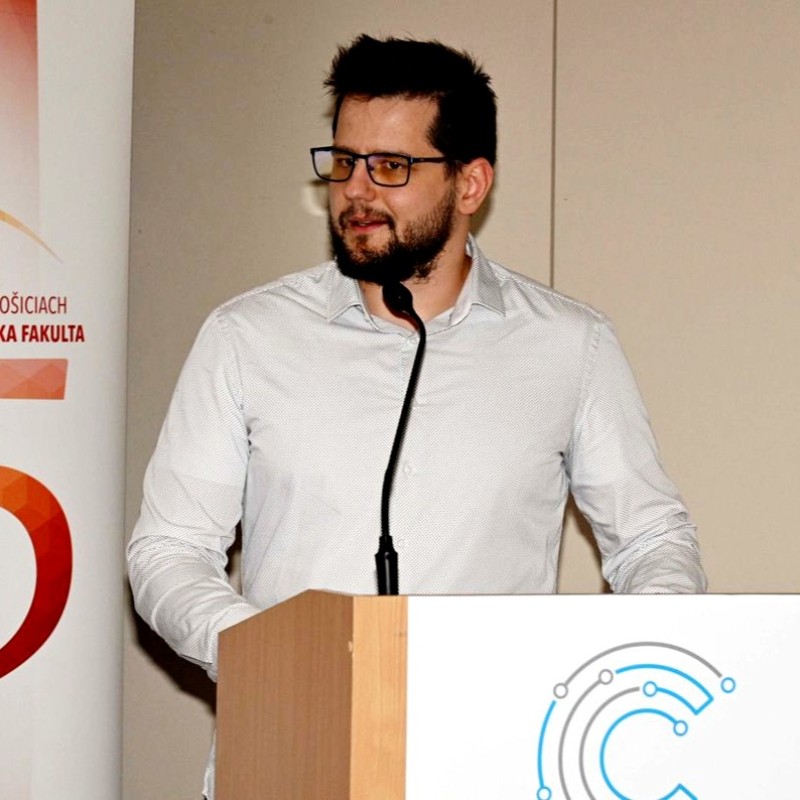
A researcher who has
shipped inside a device team
I am Matej Gazda. PhD in artificial intelligence from the Technical University of Kosice, a visiting year in Samuel Kadoury's lab at Polytechnique Montréal, and papers in IEEE TSMC, Medical Image Analysis and npj Digital Medicine.
The part that matters to a head of R&D is the other half. Five years of software engineering at TietoEVRY before the PhD, and since December 2022 the AI engineer at Laza Medical, a Shifamed portfolio company, on cardiac ultrasound. I know what happens to a model between the paper and the clinic.
I work as an external contractor, not as a candidate for a headcount line. The usual first step is the ten day engagement above.
Reconstruction from sparse views
Biplane, freehand sweeps, slice gaps, shape priors
Label-efficient segmentation
Pretraining and evaluation on the cohort you have
Speech and handwriting biomarkers
Non-image channels, from acquisition to model
A second opinion on a pipeline
Where the metric is leaking, and whether the plan holds
How I work
Call
Thirty minutes on the problem and the metric you are judged on
Scoping engagement
Ten working days, fixed scope, report and recommendation
Go or no-go
Your decision, taken on a number rather than on a promise
Build
If it is a go, the method goes into your pipeline and your tests
Handover
Code, weights and the write-up your team needs to keep it running
Research & Collaboration
Selected research
Peer reviewed, and linked so you can read them
Multiple-Fine-Tuned CNNs for Parkinson's Disease Diagnosis From Offline Handwriting
IEEE Trans. on Systems, Man, and Cybernetics
Self-Supervised Deep CNN for Chest X-Ray Classification
IEEE Access
CNN Ensemble for Parkinson's Disease Detection from Voice Recordings
Computers in Biology and Medicine
End-To-End Deformable Attention Graph Neural Network for Liver Mesh Reconstruction
IEEE ISBI
Generative Adversarial Networks in Ultrasound Imaging: Extending Field of View
Computer Methods and Programs in Biomedicine
Tell me the metric
you are stuck on
One paragraph is enough: what you are trying to measure, what you get now, and what the data looks like. I answer within a working day and I will say if it is not my problem.